
Dominik Livaković Scouting Report: Barcelona Reserve Keeper

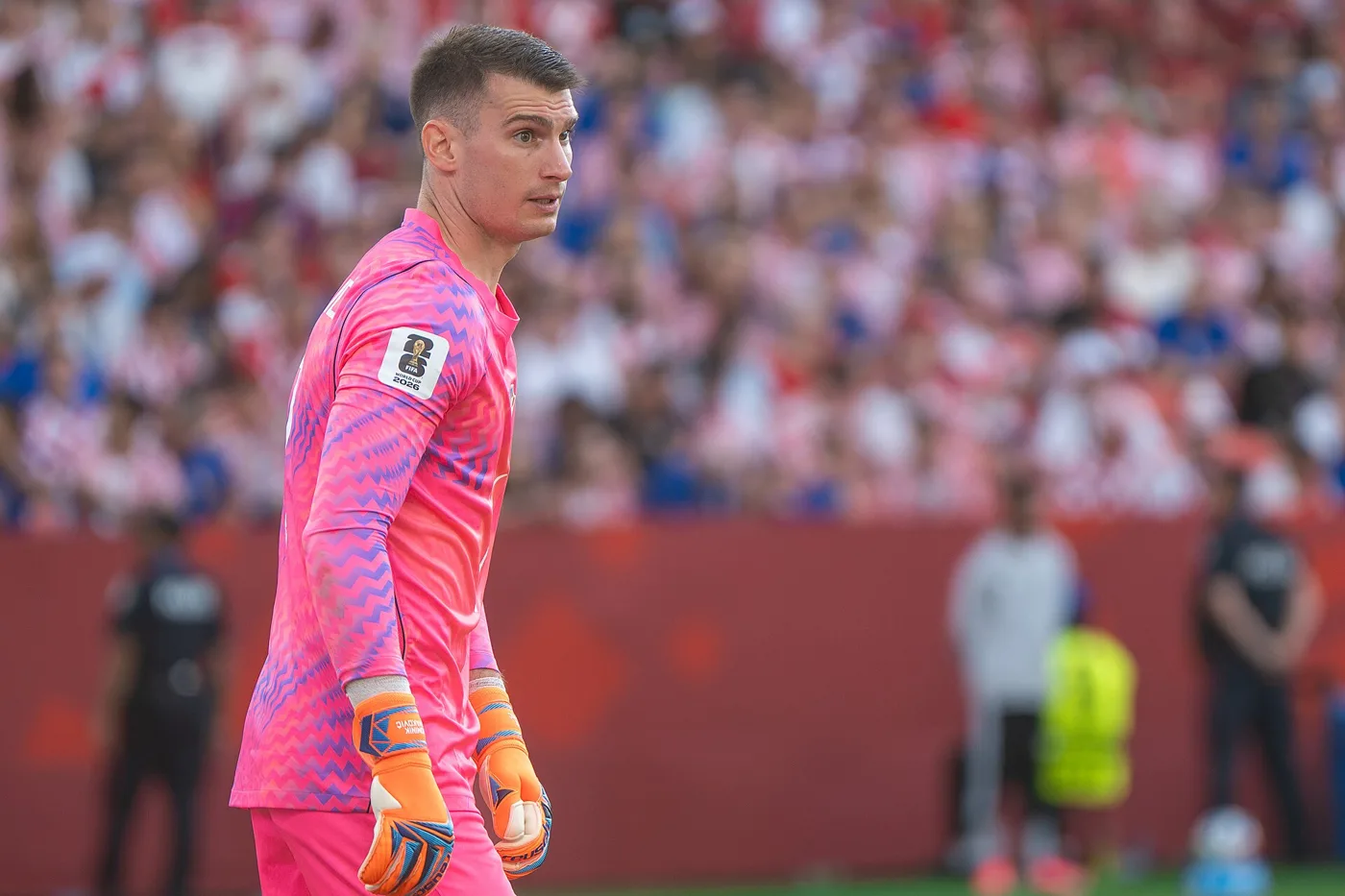

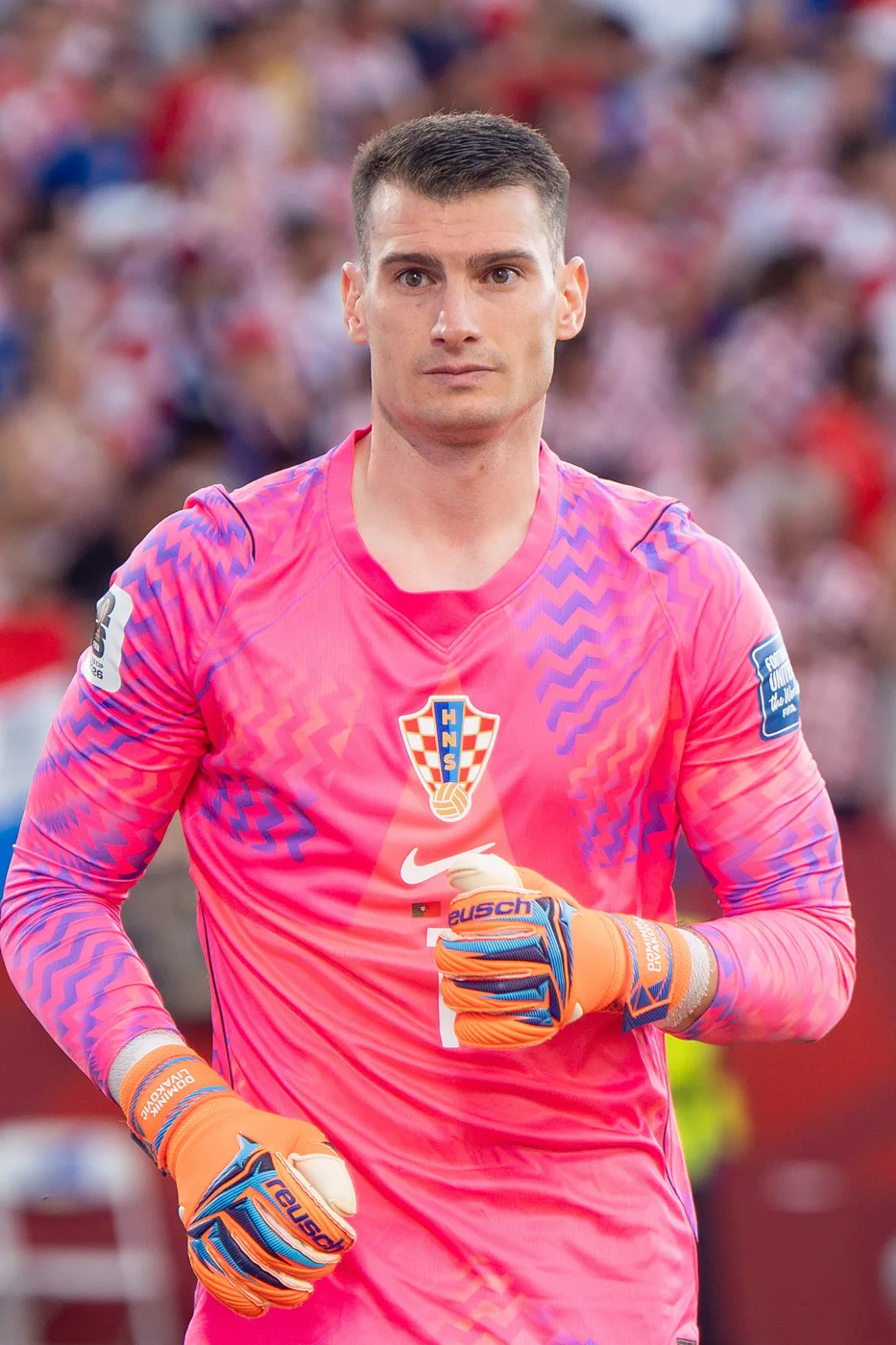
Quick scout answer: Dominik Livaković is a Croatian goalkeeper born on 9 January 1995 in Zadar, 188 cm tall, trained at NK Zagreb and Dinamo Zagreb and, since 27 August 2026, a Barcelona player on a contract running to 30 June 2030. He wears number 25 and is listed third in the club’s goalkeeper line, behind Joan García (1) and Wojciech Szczęsny (13). His career rests on two things: sharp reflex shot-stopping and a reputation for penalty saves on the biggest stages. At the 2022 World Cup he stopped three penalties against Japan in the shootout and, according to Wikipedia, made 11 saves against Brazil. The last twelve months were far quieter. He joined Girona on loan in September 2025 and never played, went back to Dinamo Zagreb on loan in January 2026 for 14-15 matches (10 goals conceded, 8 clean sheets), then started four games at the 2026 World Cup, where Croatia lost 2-1 to Portugal in the round of 32. This file treats him as an experienced reserve or loan option, not a Barcelona headliner. He knows the Turkish Süper Lig from three years at Fenerbahçe, but at 31 his ball-playing range is limited and his recent match rhythm is thin. In short: reliable in his lane, low risk on the pitch, unclear next step in his career.
Identity and Biography
| Full name | Dominik Livaković |
| Date of birth | 9 January 1995 (age 31) |
| Place of birth | Zadar, Croatia |
| Nationality | Croatia |
| Height / weight | 188 cm / 79 kg (FC Barcelona official profile) |
| Position | Goalkeeper (reflex-based shot-stopper) |
| Current club | FC Barcelona (from Fenerbahçe) |
| Shirt number | 25 |
| Contract until | 30 June 2030 (club announcement, official) |
| Market value | Current Transfermarkt figure could not be verified in this run; GegenSports estimate based on the Barcelona fee: €3-5 million (estimate) |
| International career | Croatia, about 81 caps; World Cups 2018 (runner-up), 2022 (third place) and 2026; Euro 2020 and Euro 2024 |
He began in the Zadar and NK Zagreb youth systems and made his top-flight debut for NK Zagreb on 31 August 2012. This file uses only verified, publicly available personal information.
Career and Transfer History
| Period | Club | Note | Fee |
|---|---|---|---|
| 2012-2016 | NK Zagreb | About 104 league games; debut 31 August 2012 | Undisclosed |
| 2016-2023 | Dinamo Zagreb | 295 games and 137 clean sheets per the club profile; a 535-minute shutout run in 2019 | Undisclosed |
| 2023-2026 | Fenerbahçe | 74 games and 24 clean sheets per the club profile; 57 in the Süper Lig | Reported: about €6.65 million |
| 2025-26 | Girona (loan) | No La Liga appearances; coach Míchel’s comments caused a stir | Loan, fee undisclosed |
| Jan-Jun 2026 | Dinamo Zagreb (loan) | 14-15 games, 10 conceded, 8 clean sheets; league title | Loan, fee undisclosed |
| Aug 2026 – | FC Barcelona | Four-year deal to 30 June 2030 | Reported: €2 million plus €2 million in add-ons; not confirmed by the club |
Appearance counts differ between sources. Wikipedia lists 207 games for Dinamo Zagreb and the club profile 295, most likely because one counts the league only and the other every competition. The same logic seems to explain 74 versus 57 at Fenerbahçe. We show both with labels rather than pick one as the truth. The number of Croatian league titles also ranges from seven to nine depending on the source; at least seven is safe.
Season Statistics
For goalkeepers, clean sheets alone can mislead because the defence in front shapes the result. The table gives raw counts, ratios we could calculate, and context. Advanced numbers such as PSxG (post-shot expected goals, the quality of shots on target measured against goals conceded) were not available from a reliable source in this run, so we do not invent them.
| Context | Games | Conceded | Clean sheets | Derived rate |
|---|---|---|---|---|
| Girona 2025-26 (loan) | 0 | – | – | Not assessable |
| Dinamo Zagreb 2026 (loan) | 14-15 | 10 | 8 | About 0.67-0.71 goals per game; clean-sheet rate about 53-57% |
| Fenerbahçe 2023-26 (all competitions) | 74 | Not verified | 24 | Clean-sheet rate about 32% |
| Fenerbahçe Süper Lig | 57 | Not verified | 22 | Clean-sheet rate about 39% |
| World Cup 2026 | 4 | 7 | Not stated | 1.75 goals per game; 10 saves in total |
| Barcelona 2026-27 | 1 | Not verified | Not verified | Sample far too small |
The most recent sample we can trust is those roughly 15 matches at Dinamo Zagreb, and there he played for a dominant side that limits shots. At Fenerbahçe the clean-sheet rate of 32-39% sits in the middle of the range, though defensive performance feeds into that number, so it cannot be blamed on him alone. At the World Cup he conceded 1.75 per game against strong opposition behind an ageing Croatian back line. The takeaway is simple: he barely played in 2025-26, and the data cannot support a broad verdict. Our rating reflects that uncertainty.
Playing Style Analysis
Shot-stopper: his value sits on the line and at close range. Barcelona’s own profile describes "pure instinct and cat-like reflexes". That is club language, but the match footage fits it. Early against Portugal he denied Bruno Fernandes’ low shot after a Leão cut-back. A shot-stopper is a keeper who prevents goals through reaction speed more than through positioning.
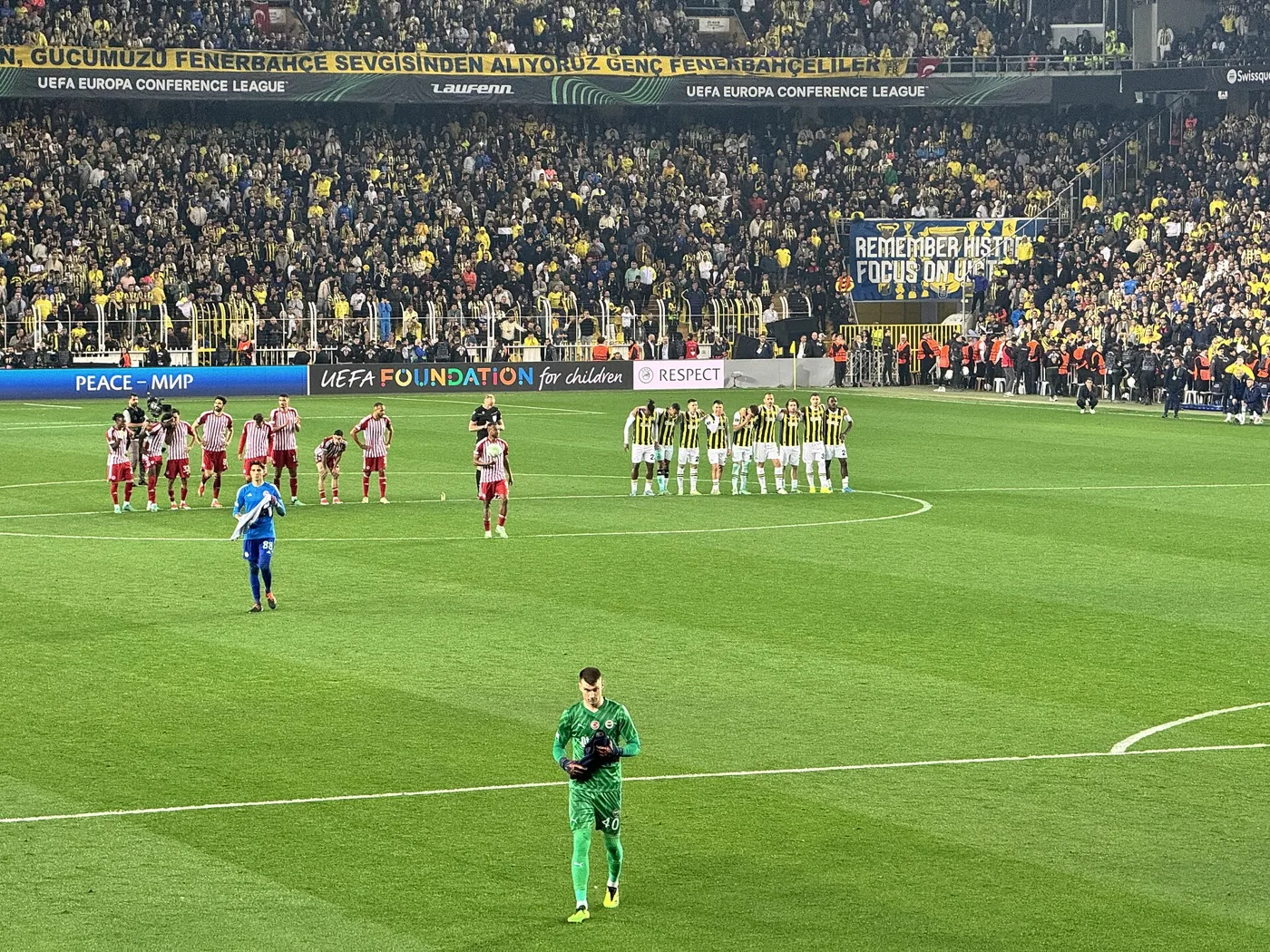
Penalty saves: three stops against Japan in 2022 are his most visible trait. The shootout he played for Fenerbahçe against Olympiacos did not go the same way, as Olympiacos went through. Saving a penalty is partly reading the taker and partly choosing the right moment to move. The sample is small, so its in-game average value is hard to measure, but in knockout football it is a real psychological edge.
Aerial command and crosses: at 188 cm he is a little under today’s elite standard. He prefers to stay on his line rather than contest the ball against a striker, which gives sides that face many crosses more exposure. How well the defence closes wide areas therefore changes his output directly.
Build-up: Barcelona demand press resistance (keeping the ball and progressing under pressing) and a high line, so the keeper’s feet matter. Livaković has been safe rather than creative; his mix of long and short passing is average, and he is not expected to play a different role from Joan García or Szczęsny. This section reflects our own observation from a limited number of matches and public summaries, not a statistical claim.
Strengths
- Reflexes and close-range saves: quick reactions on short-range shots and deflections; the 11 saves against Brazil in 2022 are the best-known example.
- Penalty performance: three shootout saves against Japan; measurable value in cup and knockout ties. It is not repeatable on demand, as Fenerbahçe’s shootout exit to Olympiacos shows.
- Big-match experience: three World Cups (2018, 2022, 2026) and two European Championships (2021, 2024); runner-up in 2018, third in 2022.
- Consistency: seven years and 295 games at Dinamo Zagreb, the 535-minute shutout run in 2019 and a place in the 2020-21 Europa League Squad of the Season.
- Süper Lig experience: three seasons at Fenerbahçe mean he already knows the league’s tempo, away trips and crowd pressure.
Weaknesses
- Height and aerial play: 188 cm is average among top keepers, and the habit of staying on the line adds risk from crosses.
- Build-up limit: a handicap in Barcelona’s high-line, pass-out-from-the-back model, and the gap to Joan García shows here.
- Little recent playing time: none at Girona in 2025-26, then about 15 games at Dinamo; match rhythm is a question.
- Attitude debate: Girona coach Míchel was reported as saying the keeper was focused on the World Cup and did not want to play. That is a claim; the player’s own response could not be verified here. It still raises a squad-harmony question.
- Goals conceded at the 2026 World Cup: seven in four games. The defence carries much of the blame, but he was not as decisive as at the previous two tournaments.
GegenSports Rating
GegenSports scout rating: 76 / 100. This score is independent of any other platform and comes from the information above. Weighting: shot-stopping (30%) 82, penalties and big-match impact (15%) 88, aerial play and box control (15%) 68, build-up (15%) 66, consistency and recent data (15%) 62, attitude and professionalism (10%) 70. High ceiling, middling floor.
Similar Players
- Wojciech Szczęsny: same club, another experienced, reflex-driven keeper strong on penalties. The similarity is in style; Szczęsny reached a higher career level.
- Jan Oblak: a parallel in line saves and positioning, but Oblak operates at a much higher level, so the comparison is about profile, not equal quality.
- Kasper Schmeichel: a long-serving top-level keeper known for leadership and reflexes; Livaković cuts a similar veteran figure.
Süper Lig Fit and Suitable Turkish Clubs
After three seasons in the Süper Lig the adaptation risk is low. Language, crowd pressure, away conditions and refereeing are familiar. By profile, these are GegenSports’ theoretical fits, not confirmed interest:
- Clubs with heavy crowd pressure, such as Trabzonspor and Beşiktaş: could use an experienced keeper who knows the league, as first choice or strong competition. It depends on Barcelona’s asking price and his wages.
- Upper-mid-table sides such as Başakşehir, Samsunspor and Göztepe: a reflex-based keeper makes more difference behind a lower defensive block.
- Loan scenario: a loan was floated in the press, in which case the cost of the move could stay modest.
Ideal teammates: two centre-backs who dominate in the air and a defence that keeps the box compact against crosses complement a keeper who is strong on the line and limited off it. Quick full-backs cut down the number of crosses. At Barcelona he fits best as an experienced reserve within a group led by Joan García.
Adaptation score (Süper Lig): 90/100. Reason: three Fenerbahçe seasons and knowledge of the league and language. Risk: little match time in the last year takes 10 points off.
Cost and Value Scenarios
Press reports put Barcelona’s outlay at €2 million fixed plus €2 million in add-ons; there is no official figure. That is a low entry price in the goalkeeper market. Without inventing any offer, three scenarios are plausible:
- Loan: with Barcelona covering part of the wages, the lowest-risk route for a borrowing club.
- Permanent transfer: the €3-5 million range is a GegenSports estimate; Barcelona is unlikely to go far below what it paid or far above it.
- Stay put: remaining as third-choice keeper at Barcelona, with the wage burden on the club and very few minutes for the player.
Development Potential, Injuries and Availability
For a 31-year-old goalkeeper the next four to six seasons can still be productive, since keepers decline later than outfield players. Development potential is limited; the main area for change is build-up and command of the box. We found no long, serious injury in public sources in this run, but because Transfermarkt was unreachable, the injury history is not described as definitively clean.
Foreign Status and UK Work Permit
Croatia is an EU country, which gives free movement in Spain. Turkey’s foreign-player quota is set by the TFF season by season, so we give no exact figure; having played at Fenerbahçe, he is familiar with how such rules work. For the UK, the post-Brexit system uses the Governing Body Endorsement (GBE) points route, where one criterion is the share of national-team matches played over the last two years, with the required share depending on the national team’s FIFA ranking. Croatia’s ranking (13th) and his World Cup role look encouraging, but this is not a legal opinion; current rules should be checked with the Premier League and the Home Office.
Suitable Leagues
- Süper Lig (Turkey): a league-tested, experienced keeper profile.
- HNL (Croatia): a return to Dinamo Zagreb or a rival, where he spent most of his career.
- La Liga (Spain): lower and mid-table clubs; the Girona spell went badly, but it does not show a league mismatch on its own.
- Greek Super League: clubs needing an experienced keeper and chasing European qualification.
- Saudi Pro League or Qatar: wage-driven options; this is theoretical, not confirmed interest.
Sporting Director Summary
Buy if: you want an experienced, big-match keeper at low cost who already knows the league. Watch out for: he played roughly 15 matches in the last 12 months, so a first-choice role may need a fitness and match-tempo plan. Avoid if: you run a high line and expect the keeper to build with his feet and he would be first choice. Verdict: a 76/100 profile as a reserve or competition signing; as first choice it depends on context.
Frequently Asked Questions
Who is Dominik Livaković?
A Croatian goalkeeper born on 9 January 1995 who moved to Barcelona in 2026 after Dinamo Zagreb and Fenerbahçe.
When did Livaković join Barcelona?
The move was announced on 27 August 2026 on a deal to 30 June 2030. The fee was not officially disclosed; the press reported €2 million plus €2 million in add-ons.
Where does he rank among Barcelona’s goalkeepers?
The official squad list shows Joan García (1), Wojciech Szczęsny (13) and Livaković (25), so he appears as third-choice.
Which World Cups has he played?
2018 (runner-up), 2022 (third place) and 2026 (out in the round of 32, 2-1 against Portugal).
Why did he not play at Girona?
Sources say he made no appearances all season. Coach Míchel said the player was focused on the World Cup; that is an opinion and the player’s own account could not be verified.
What are Livaković’s strengths?
Reflexes, close-range saves, penalty saving and big-match experience.
What are his weaknesses?
Average height, a cautious approach to crosses, limited build-up play and low recent playing time.
Does he suit the Süper Lig?
He knows the league and Fenerbahçe, so adaptation risk is low. This is a theoretical assessment, not confirmed interest.
What is his market value?
The current Transfermarkt value could not be verified; the GegenSports estimate is €3-5 million.
When does his Barcelona contract end?
30 June 2030.
Could he leave on loan?
The press has discussed it; nothing had been confirmed when this report was written.
Could he play in England?
The post-Brexit work-permit system is points-based. Croatia’s FIFA ranking is a positive sign, but a firm view needs the current rules and club legal advice.
Related Articles
- Wojciech Szczęsny scouting report: Barcelona’s veteran keeper
- Diego Villares scout report: Deportivo
- Unai Simón scout report: Athletic Club
- Dominik Čelija scout report: Istra 1961
- Rene Hrvatin scout report: Istra 1961
- Joan García scouting report (Spanish edition)
Sources
- FC Barcelona official website, Dominik Livaković player profile and 2026/27 squad numbers announcement
- Wikipedia, Dominik Livaković
- beIN SPORTS, "Livakovic makes Barcelona switch from Fenerbahce" (27 August 2026)
- Croatian Football Federation (HNS) official news, 2026 World Cup
- Fanatik and NTV Spor, Fenerbahçe-period coverage
- FotMob and Soccerway player pages (limited verification)
- Transfermarkt was unreachable in this run; market value and injury history were not verified against it
- Images: Wikimedia Commons, Bryan Berlin and Bjelica, CC BY-SA 4.0