
Ante Erceg Scout Report: What Gorica’s Well-Travelled Forward Still Offers

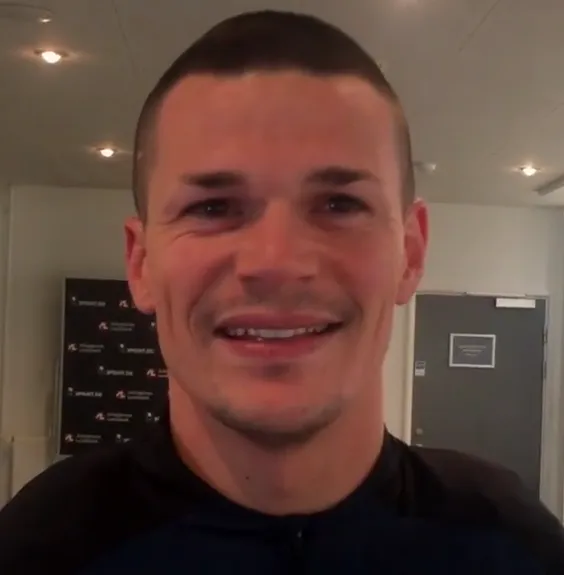

Ante Erceg
Quick Verdict
Ante Erceg’s file splits cleanly into two careers under one name. The first belongs to Hajduk Split, where between 2016 and 2018 he scored 26 goals and set up 18 more in 56 official appearances, was voted the club’s player of the season by its members, and picked up the “Hajdučko srce” (Hajduk’s Heart) award after a half-season in which he was the squad’s outright top scorer and top assist-provider with 13 goals and 7 assists. The second career started the moment Hajduk sold him to Shabab Al-Ahli for a reported €1.5m in January 2018, and it reads very differently: four wandering years at Brøndby IF that produced only 5 goals in 31 appearances, a loan back to Croatia at NK Osijek, a short stop in Hungary, a genuine goal-scoring recovery at NK Istra 1961 (18 goals in 44 games), and a half-season at Eredivisie side Fortuna Sittard before a free transfer to HNK Gorica on 10 January 2025. He is 36 now, tied to Gorica until June 2027, and publicly available data credits him with just 275 minutes and 2 goals in the 2025-26 Prva HNL season — a workload interrupted by an injury sustained warming up before a fixture against Varaždin. His Transfermarkt valuation has fallen from a career-high €1.75m in 2018 to €50,000 today. This report treats him not as a development prospect but as what he clearly is: a low-cost, low-minutes forward whose remaining value is tactical intelligence and dressing-room leadership rather than sprint speed or aerial power.
Player Card
| Full name | Ante Erceg |
| Date of birth | 12 December 1989 |
| Age | 36 |
| Place of birth | Split, Croatia |
| Nationality | Croatian |
| Height | 1.80 m |
| Preferred foot | Right |
| Primary position | Centre-forward |
| Secondary position | Winger (used in wide roles earlier in his career) |
| Shirt number | 50 |
| Club | HNK Gorica |
| Joined club | 10 January 2025, free transfer from Fortuna Sittard |
| Contract expires | 30 June 2027 |
| Market value | €50,000 (Transfermarkt, update of 29 May 2026) |
| National team | No verifiable senior Croatia cap found in public records |
Career and Transfer History
| Period | Club | Note / fee |
|---|---|---|
| 2001-2008 | RNK Split (youth) | Split-born, single-club academy product |
| 2008-2016 | RNK Split (first team) | Promoted to the senior side at 19; eight seasons at the club |
| 2010 (Jan-Jun) | Junak Sinj (loan) | Loan move, no fee reported |
| 2016 (Jan) | Balıkesirspor (TFF 1. Lig, Turkey) | Fee: undisclosed |
| 2016 (Jul) | Hajduk Split | Fee: Transfermarkt record — €375,000 |
| 2018 (Jan) | Shabab Al-Ahli (UAE) | Fee: Transfermarkt record — €1,500,000 |
| 2018 (Jul) | Brøndby IF (Denmark) | Free transfer |
| 2020 (Jan-Jul) | Esbjerg fB (loan) | Mid-season loan |
| 2020 (Aug) – 2022 (Jun) | NK Osijek (loan) | Season-long loan, later extended |
| 2022 (Jul) | Debrecen (Hungary) | Free transfer from Brøndby; brief stay |
| 2022 (Aug) | NK Istra 1961 | Free transfer from Debrecen |
| 2024 (Mar) | Free agent | Departed Istra 1961 |
| 2024 (Jul) | Fortuna Sittard (Netherlands, Eredivisie) | Free transfer |
| 2025 (10 Jan) – present | HNK Gorica | Free transfer; contract to 30 June 2027 |
Season and Career Statistics
| 2025-26 Prva HNL (HNK Gorica) | 2 goals, 0 assists, 275 minutes |
| Recent Prva HNL total (Rezultati.com, scope unclear) | 21 appearances (19 starts), 6 goals, 0 red cards |
| Hajduk Split — all official matches (2016-2018) | 56 apps, 4,123 minutes, 26 goals, 18 assists |
| Hajduk Split — league only (2016-2018) | 44 apps, 20 goals, 11 assists |
| Hajduk Split — one half-season (2016-17, club’s top scorer & assister) | 13 goals, 7 assists |
| NK Istra 1961 (2022-2024) | 44 apps, 18 goals |
| Brøndby IF (2018-2022, excluding loan spells) | 31 apps, 5 goals |
| Esbjerg fB (loan, 2019-20) | 8 apps, 0 goals, 0 assists, 5 yellow cards |
A caveat on the numbers: sources do not agree on scope. Rezultati.com’s “21 apps / 6 goals” figure does not specify the exact date range it covers, and this report presents it as-is rather than guessing at its boundaries. The 2025-26 Gorica line (2 goals, 275 minutes) comes from a separate, more recent data pull.
Who is he? From Split to a nine-year European tour and back
Ante Erceg was born on 12 December 1989 in Split and came through the RNK Split academy, breaking into the first team at 19 after a brief loan spell at lower-division Junak Sinj in the first half of 2010. Eight seasons at his boyhood club shaped him into a patient, physically robust forward rather than a precocious wonderkid — he was closer to 27 than 20 by the time he left for his first foreign move.
January 2016 took him to Turkey’s TFF 1. Lig with Balıkesirspor, a short stay that ended within six months when Hajduk Split paid a reported €375,000 to bring him home to the country’s biggest stage in the summer of 2016. What followed were the two best years of his career: 26 goals and 18 assists in 56 official appearances, a club-vote Player of the Season award, and the “Hajdučko srce” honour for the 2016-17 campaign after a half-season in which he single-handedly topped both the goals and assists charts for the club. Croatian coverage from the period described him plainly as a strong, old-school footballer and the team’s on-pitch spokesman.
That form earned him a €1.5m move to Shabab Al-Ahli in the United Arab Emirates in January 2018 — still the highest fee ever paid for him. It was also, in hindsight, the peak of his market value and the start of a much rockier second half of his career.
Lost in Denmark, found again at home
Brøndby IF signed Erceg on a free transfer in July 2018, and the four years that followed were the least productive stretch of his career: just 5 goals in 31 appearances for the parent club. A loan to Esbjerg fB in the first half of 2020 did not help — 8 matches, no goals, no assists, and 5 yellow cards, a sign he kept competing physically even as his end product disappeared.
In August 2020 Brøndby loaned him back to Croatia, to NK Osijek, and the arrangement stretched to roughly two years — a clear signal the Danish club no longer saw him in its plans. When his Brøndby contract ended in the summer of 2022, a brief stint at Hungary’s Debrecen preceded a free move to NK Istra 1961 that August. The two seasons at Istra (2022-2024) were his second-best output of his career: 18 goals in 44 appearances, nowhere near the Hajduk peak but a clear recovery from the Danish years.
He left Istra in March 2024, spent a few months without a club, and then made a late-career jump back to a top-five European league, joining Eredivisie side Fortuna Sittard in July 2024 at the age of 34. That spell lasted half a season before ending in a free transfer to HNK Gorica on 10 January 2025. Gorica’s decision to hand a 35-year-old a contract running to June 2027 signals they see a role for him well beyond a short-term fix.
How does he play? What “old-school forward” means on the pitch
Croatian coverage of Erceg’s Hajduk years consistently used one description: a strong, old-school footballer. Translated into modern scouting language, that phrase points to a few concrete things. First, having played on the wing earlier in his career, he is not a fixed target man pinned between two centre-backs — he is comfortable operating in the half-space, the vertical channel between a full-back and a centre-back, drifting there when a winger cuts inside and vacates the touchline.
Second, the 18 assists from his Hajduk period point to real hold-up play — the ability to receive with his back to goal, shield the ball under pressure, and lay it off to an onrushing midfielder or winger rather than simply trying to finish everything himself. That skill connects directly to press resistance: a forward who can keep the ball under close marking gives his team a release valve and a platform to break lines after winning possession, rather than immediately giving the ball back.
Third, the “team spokesman” framing used by Croatian outlets points to an organisational and leadership role on the pitch. At 36, this should be read less as a source of physical output and more as verbal guidance for younger attackers on positioning and pressing triggers. Advanced public data — expected goals, progressive carries, pressures per recovery — is essentially unpublished for this tier of the Prva HNL, so this section leans heavily on career pattern and reported role rather than a metrics table; that is a genuine data limitation this report states openly rather than papers over.
Does he fit the Süper Lig?
An honest read is required here: a 36-year-old forward with a €50,000 market value who logged just 275 minutes in 2025-26 is not a realistic option for the competitive top half of Turkey’s Süper Lig. The profile makes more sense at the lower-to-mid table of the Süper Lig or in the TFF 1. Lig, in a specific role: a low-minute “mentor forward” who brings experience and dressing-room leadership to a young attacking line. That mirrors his own first taste of Turkish football at Balıkesirspor in 2016 — a short, experience-driven stint rather than a marquee signing.
The club profile that fits is not one chasing guaranteed goals from him, but one that wants a positional reference point for its own young centre-forwards — typically a lower-to-mid table Süper Lig side, or an ambitious TFF 1. Lig club, short on squad depth up front and looking for a low-cost, low-risk name to set standards in training rather than start every week. This is a framework based on career profile, not a claim of any actual transfer interest.
Strengths
- Proven penalty-box finishing — 26 goals in 56 official Hajduk appearances and 18 in 44 at Istra 1961 show a scoring pattern that has repeated at multiple points of his career.
- Positional versatility — early-career wing experience gives him comfort operating wide and cutting inside, adding flexibility a fixed target man lacks.
- Playmaking and hold-up ability — 18 assists during his Hajduk peak show he is not a pure finisher; he can shield the ball and set up teammates.
- Leadership and dressing-room presence — the “Hajdučko srce” award, a members’-vote Player of the Season honour, and a track record of speaking to the press about title races all point to a trusted senior voice.
- Demonstrated cross-cultural adaptability — spells in Turkey, the UAE, Denmark, Hungary and the Netherlands mean he has already adjusted to six different football environments.
Development Areas and Risks
- Age-related physical decline — at 36, repeated sprint output and match-to-match freshness naturally trend downward; this is the most fundamental risk to any projection of his output.
- Minimal 2025-26 minutes — a 275-minute sample makes it hard to draw a reliable conclusion about his current fitness and form, and includes a warm-up injury sustained before a match against Varaždin.
- Documented drop-off at Brøndby — 5 goals in 31 appearances in the Danish Superliga shows that a step up in league intensity is not something he has always handled well.
- Missing advanced data — expected goals, progressive carries, and pressure-recovery numbers are almost entirely unpublished for this level of Croatian football, a genuine blind spot for modern tactical analysis.
- Market value trend — the fall from a €1.75m peak in 2018 to €50,000 today plainly reflects the market’s own read on his remaining sporting value.
GegenSports Scout Scores (/100)
| Category | Score | Note |
|---|---|---|
| Finishing / box impact | 66 | A repeated career strength, but the current sample size is tiny |
| Physical / athletic profile | 48 | Age 36 and a limited 2025-26 workload point to a declining curve |
| Tactical intelligence / positioning | 70 | Versatility and hold-up history suggest a high football IQ |
| Leadership / dressing-room value | 78 | The Hajdučko srce award and his role as team spokesman are strong indicators |
| Adaptability | 75 | Six countries of experience is a proven adjustment record |
| Current market/marketability | 35 | A €50,000 valuation and low minutes badly limit transfer appeal |
| GegenSports Overall Score | 59 / 100 | An above-rotation, experience-and-leadership profile — no big-league jump should be expected |
This score frames Erceg not as a developing talent but as a player in the final phase of his career selling experience, leadership, and a niche finishing ability. A 59/100 corresponds to a meaningful rotation option in the middle of the Prva HNL table, not a fit for a top-flight league or the competitive upper half of the Süper Lig.
Comparable Players
The names below are not technical matches for Erceg; they are career-arc comparisons — Croatian centre-forwards who took a long European and Middle Eastern tour before returning home to sell experience in the closing years of their careers.
| Player | Point of comparison |
|---|---|
| Duje Čop | Croatian centre-forward who played in Iran, Israel, China and elsewhere, spending the second half of his career as a well-travelled finisher |
| Mario Budimir | Croatian centre-forward with spells in Turkey, Poland and Israel among others, returning home late in his career |
| Ivan Krstanović | Croatian centre-forward with short-term contracts across numerous countries, a classic “footballing wanderer” archetype |
Ideal Teammates
Given that Erceg is fed by box positioning and hold-up play rather than aerial delivery, the ideal supporting cast includes: a winger who can deliver an early ball from the byline or a low cutback rather than a high cross; a late-arriving eight who can time a run off his hold-up play; and a high-pressing double pivot eager to transition quickly once possession is won. His leadership value is amplified further when paired with a younger second striker or emerging finisher he can mentor in real time.
Adaptation Score
8/10. A career that has taken in Croatia, Turkey, the UAE, Denmark, Hungary and the Netherlands is a strong, repeated demonstration of his ability to adjust to a new league, culture and dressing room. The score falls short of a perfect mark because his Danish spell shows adaptation does not always translate into on-field output — he settled in without necessarily performing.
Cost Scenarios
| Scenario | Assessment |
|---|---|
| Free or nominal fee (summer window) | The most realistic outcome. Even with a contract running to 2027, a €50,000 valuation and his age make it plausible Gorica would release him for a small fee or none at all. |
| Short-term loan | A sensible option for a club needing minutes restored; low risk for the parent club, a route back to regular football for the player. |
| High transfer fee | Not recommended. The current playing-time sample (275 minutes) and the market value trend both point to any significant fee being disproportionate to the likely sporting return. |
Development Potential
Classic “development” framing does not apply to a 36-year-old. The real question is how his decline is managed, not how far he can still grow. His remaining value increasingly lies in football intelligence, positional know-how and dressing-room leadership rather than raw physical output. A realistic expectation is a continued, gradual reduction in playing time over the next one to two seasons, with his influence persisting off the immediate scoresheet through mentorship and tactical reference value.
Injury and Durability Record
Public sources show no long-term, career-threatening injury on Erceg’s record; regular playing time at RNK Split, Hajduk Split and Istra 1961 across the years points to a generally durable player. That said, a warm-up injury sustained ahead of a 2025-26 fixture against Varaždin — reported by Index.hr — and the resulting low minute count (275 for the season) should be read as a natural caution flag for a 36-year-old. The exact nature and duration of the injury are not detailed in public sources, and this report avoids assuming specifics that have not been confirmed.
Foreign Player Status and Süper Lig Quota
As a Croatian citizen, Erceg would not be subject to anything resembling the UK’s Governing Body Endorsement work-permit system — that framework applies only to the English Premier League and EFL and has no bearing here. Turkey’s foreign-player rule works on a fixed quota of foreign players rather than a nationality-based classification the way the UK system does, so his Croatian passport neither helps nor hurts him relative to an EU passport in this context. The real question for any interested Süper Lig or TFF 1. Lig club is whether it has an open foreign-player slot for a centre-forward and whether it wants to spend that slot on a 36-year-old with a small recent minutes sample — a squad-planning decision rather than a sporting-value one.
Suitable Leagues
| League | Rationale |
|---|---|
| Croatian Prva HNL (current league) | The best current match for his physical and sporting level; his existing role at Gorica is sustainable |
| Turkish TFF 1. Lig | A low-risk mentor-forward option for a promotion-chasing club wanting to add experience to a young attacking line |
| Turkish Süper Lig (lower-to-mid table) | Only on low-minute terms and a low fee; not advisable for a club competing at the top of the table |
| Bosnia-Herzegovina Premijer Liga / Slovenia PrvaLiga | A regional “late-career tour” option consistent with his career pattern, with physical intensity close to the Prva HNL |
| Gulf-region second-tier leagues | A lower-intensity, higher-salary end-of-career option in the mould of his Shabab Al-Ahli spell |
Sporting Director’s Note
Do not evaluate Ante Erceg as a project — he is a solution to a specific, narrow problem. If you need a name who adds experience, leadership and box-positioning know-how to a young attacking line, without expecting 90 guaranteed minutes every week, the profile fits. He can be considered on a free or nominal fee, on a short-term deal. If you need consistent starting-XI competition, high physical intensity, or a guaranteed goal return, close this file and look at younger alternatives.
Frequently Asked Questions
Who is Ante Erceg?
A Croatian centre-forward, born 12 December 1989 in Split. He came through the RNK Split academy and has since played for Hajduk Split, Shabab Al-Ahli, Brøndby IF, NK Osijek, Debrecen, NK Istra 1961 and Fortuna Sittard, joining HNK Gorica in January 2025.
How old is Ante Erceg and where is he from?
He is 36, born 12 December 1989 in Split, Croatia.
What position does Ante Erceg play?
Primarily centre-forward. Early wing experience gives him comfort operating in wide areas and half-spaces, which sets him apart from a fixed target-man profile.
How did Ante Erceg perform at Hajduk Split?
Between 2016 and 2018 he scored 26 goals and added 18 assists in 56 official matches, topped the club’s scoring and assist charts in one half-season, and won the “Hajdučko srce” award for 2016-17.
Which club does Ante Erceg play for now?
HNK Gorica in Croatia’s Prva HNL. He has been with the club since January 2025, on a contract running to 30 June 2027.
What is Ante Erceg’s market value?
€50,000 according to Transfermarkt’s update of 29 May 2026 — a sharp fall from his career-high €1.75m valuation in 2018.
How much did Ante Erceg play in 2025-26?
Public records credit him with 275 minutes and 2 goals, a workload limited in part by an injury suffered during the season.
What is Ante Erceg’s injury history?
No long-term, career-threatening injury appears in public records. He suffered a warm-up injury ahead of a 2025-26 fixture against Varaždin; the exact details are not fully documented publicly.
Would Ante Erceg fit the Süper Lig?
Not for the competitive top half. He could make sense for a lower-to-mid table Süper Lig or TFF 1. Lig club on low-minute, low-cost terms as an experience-and-leadership forward.
Does Ante Erceg have a national team record?
No verifiable senior Croatia cap was found in public sources; this report does not assume an unconfirmed international history.
What is Ante Erceg’s career-record transfer fee?
Per Transfermarkt, his highest recorded fee is €1.5m, paid by Shabab Al-Ahli to Hajduk Split in January 2018.
Why did Ante Erceg move to HNK Gorica?
He joined on a free transfer from Eredivisie side Fortuna Sittard in January 2025, marking a return to Croatian football after nine years largely spent abroad.
If you’re reading this file, also check
- Patrik Mijić scouting report — another forward option in Gorica’s attack
- Bruno Bogojević scouting report — the midfielder feeding the right-hand channel
- Luka Vrzić scouting report — Gorica’s wide-forward option
- Domagoj Pavičić scouting report — the midfielder carrying the ball into attack
- Marijan Čabraja scouting report — the experienced core of Gorica’s defence
- Kevin Čustović scouting report — a rotation option on the right flank
This file draws on Transfermarkt profile, transfer-history and market-value records, public news coverage (Hajduk Split’s official site, Telegram.hr, Jergovic.com, Index.hr, Sportnet.hr, Nacional.hr) and statistics aggregators (Rezultati.com, Soccerway). Advanced individual metrics (xG, progressive carries, etc.) are not publicly available at this level of Croatian football, a limitation stated openly in the tactical sections. Data current as of 27 August 2026. The featured image is sourced from Wikimedia Commons under a CC BY 3.0 licence.
- Transfermarkt — player profile, transfer history, market-value development and contract record
- HNK Gorica squad page and Transfermarkt squad list — shirt number and position confirmation
- Wikipedia (English) — Ante Erceg career summary and club history
- Hajduk Split official site (hajduk.hr) — Shabab Al-Ahli transfer news and Hajduk-era context
- Telegram.hr — Erceg interview on wanting to return to Hajduk, and career commentary
- Jergovic.com — profile piece on Erceg in the context of Hajduk’s 2016-17 title challenge
- Index.hr — 2025-26 injury report (warm-up injury before the Varaždin match)
- Sportnet.hr — Erceg’s own comments on the 2025-26 title race
- Nacional.hr — loan-transfer report, Brøndby to NK Osijek
- Rezultati.com and Soccerway — current and career statistical records