
Gabriel Jesus Scout Report: Barcelona’s New Forward

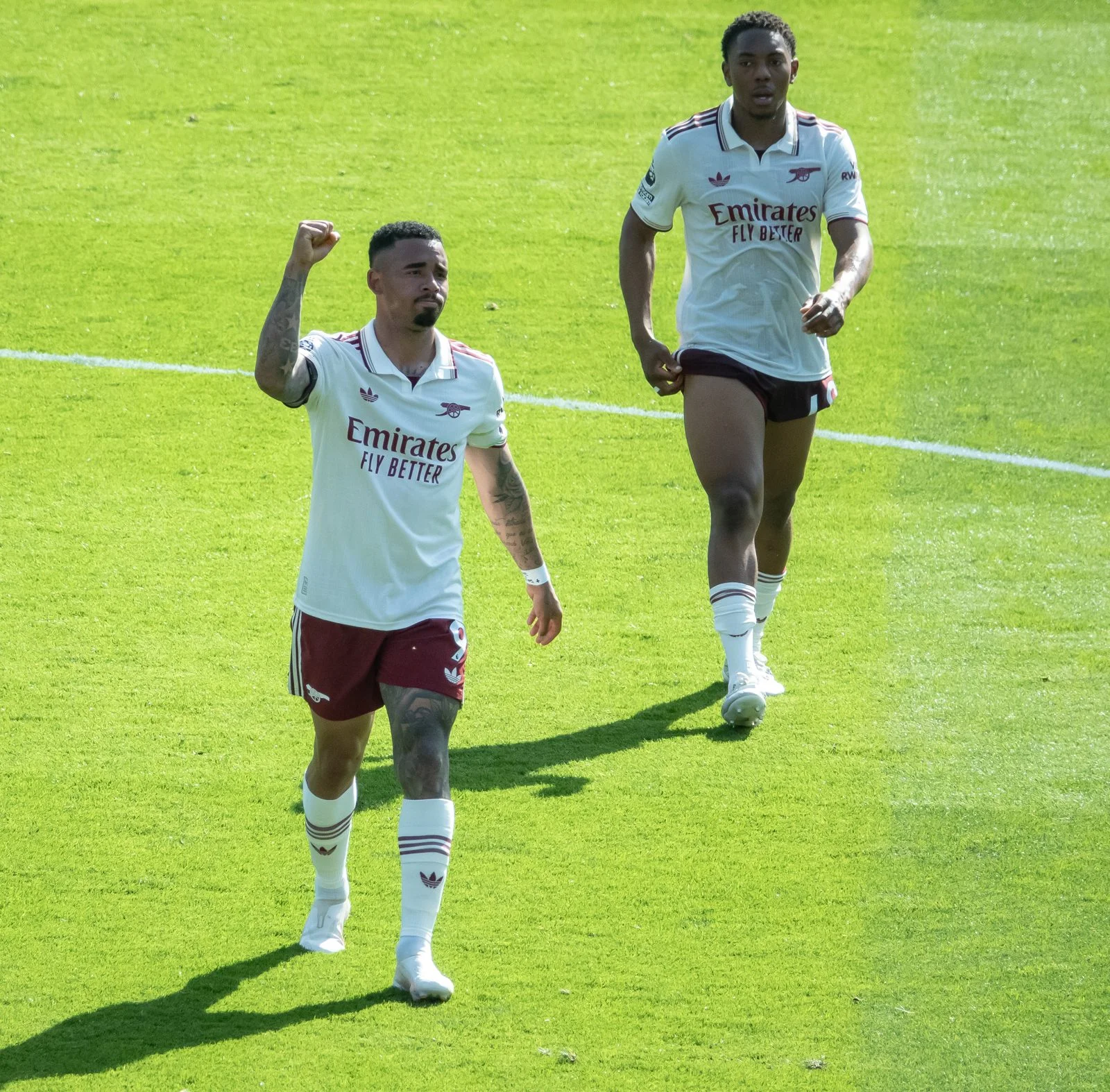

Quick Scout Take: Gabriel Jesus, the 29-year-old Brazilian forward who joined Barcelona from Arsenal on deadline day in September 2026, arrives as a late-career signing built on versatility rather than raw output. Shaped by Pep Guardiola’s false-nine experiments at Manchester City and later given creative freedom under Mikel Arteta at Arsenal, Jesus is best understood not as a classic number nine but as a “roaming forward” who drops deep, drags centre-backs out of position, and presses relentlessly once possession is lost. After a serious ACL tear in January 2025, his recovery has been gradual — just 34 minutes across his first four Barcelona appearances this season — but his technical toolkit and defensive work rate from the front remain elite by forward standards. Whether he can force his way into Hansi Flick’s rotation depends less on finishing than on how well his pressing profile fits alongside Yamal, Raphinha, Pedri and Fermín López.
Career Story: From São Paulo to Camp Nou
Jesus grew up in São Paulo’s Jardim Peri neighbourhood, raised by his mother Vera alongside two siblings. From street football to the amateur club Anhanguera and then Palmeiras’ academy, his rise followed a familiar Brazilian trajectory — until 2015, when he broke into the first team and delivered 12 goals as Palmeiras won their first national title since 1994, earning him the “Bola de Ouro” as the league’s standout player.
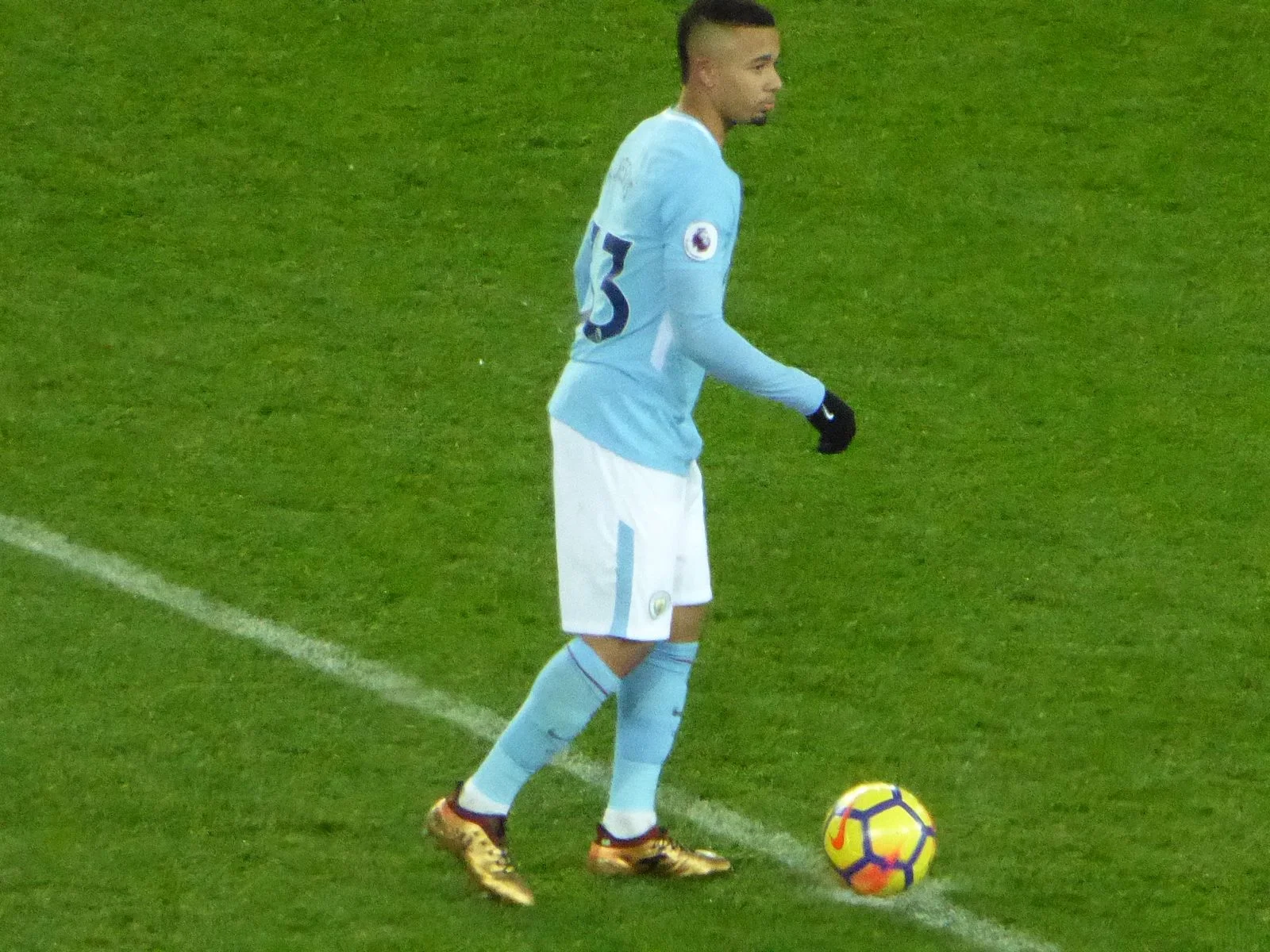
His January 2017 move to Manchester City placed him at the heart of one of Guardiola’s early attacking projects. Often overshadowed by Sergio Agüero, Jesus nonetheless became a key piece of City’s false-nine rotations, collecting four Premier League titles and 58 goals along the way. Frustration with rotation eventually pushed him to Arsenal in 2022, where he said he felt “free” under Arteta. Four seasons followed as a central figure in Arsenal’s attack, interrupted by a devastating ACL injury in January 2025 that ended his campaign. He returned in December 2025, played a bit-part role in Arsenal’s 2025-26 title run, and then completed a deadline-day move to Barcelona in September 2026 — arriving to fill the attacking gap left by Robert Lewandowski and Ferran Torres.
Identity & Biography
| Full Name | Gabriel Fernando de Jesus |
| Date of Birth | 3 April 1997 (age 29) |
| Place of Birth | São Paulo, Brazil |
| Height | 1.75 m |
| Position | Centre-forward / False nine / Winger (versatile attacker) |
| Foot | Right |
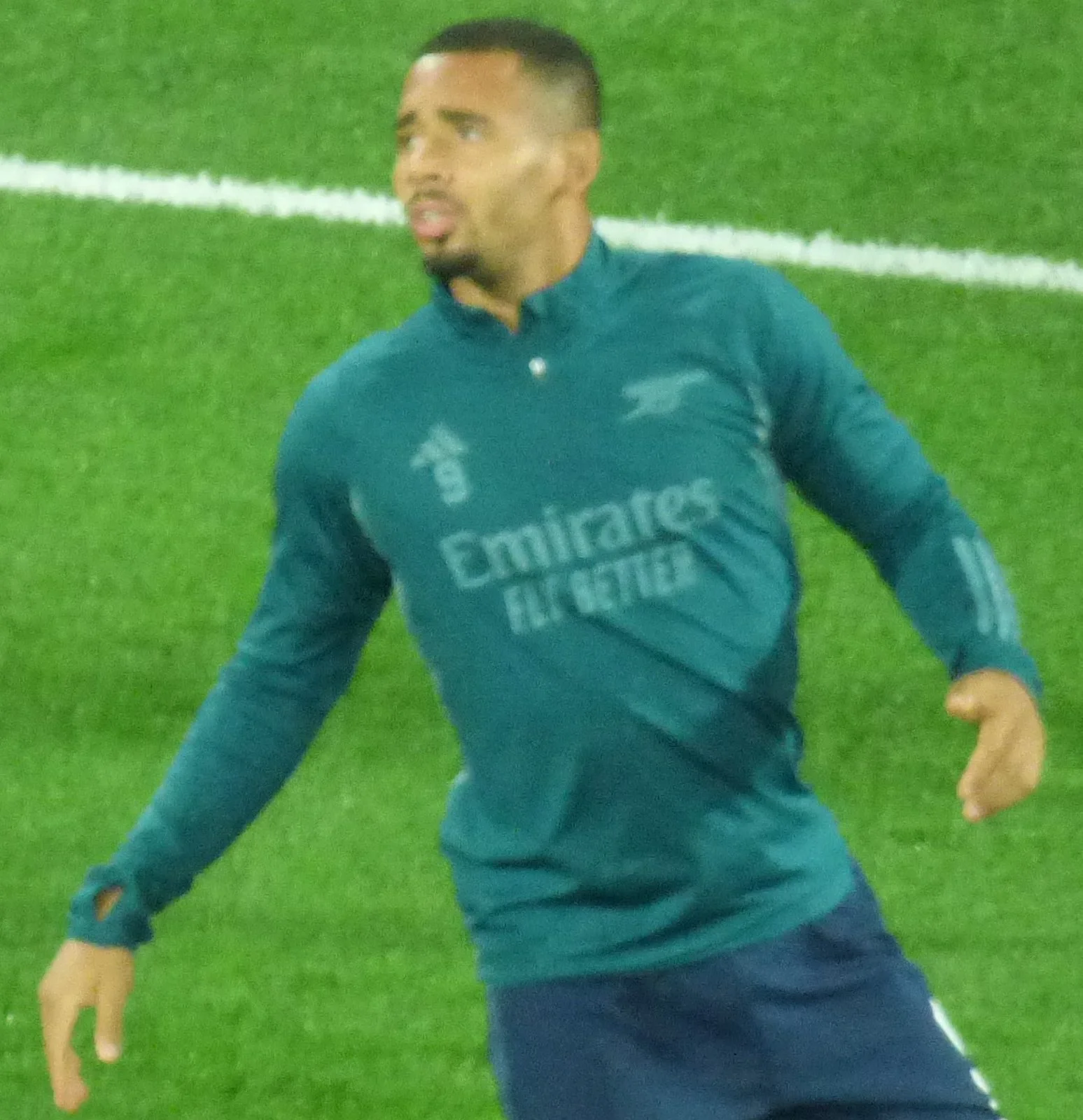
| Shirt Number | Not yet confirmed at Barcelona; wore No. 9 at Arsenal |
| Nationality | Brazil (64 caps, 19 goals as of November 2023) |
| Current Club | FC Barcelona (September 2026 – ) |
| Contract | Three-year deal (some reports cite an expiry of June 2029) |
| Market Value | Approximately €15-16M (FotMob estimate) |
Career & Transfer History
| Period | Club | Apps / Goals | Transfer Fee |
|---|---|---|---|
| 2013-2015 | Palmeiras (youth) | – | – |
| 2015-2017 | Palmeiras (first team) | 67 apps / 21 goals | – |
| Jan 2017 – Jul 2022 | Manchester City | 159 apps / 58 goals | ~£27M (reported) |
| Jul 2022 – Sep 2026 | Arsenal | 123 apps (all comps) / 32 goals (some sources report 84 league apps / 21 league goals only) | £45M (reported) |
| Sep 2026 – present | FC Barcelona | 4 apps / 1 goal (ongoing) | €10M + €4.5M add-ons (reported; sources vary between €10-15M) |
Note: Arsenal-era appearance figures vary across sources depending on whether all competitions or league-only appearances are counted; both datasets are presented here for transparency.
2026-27 Season Stats (Barcelona)
| Matches | 4 |
| Minutes Played | 34 |
| Goals | 1 |
| Assists | 0 |
| Shots (on target) | 3 shots, 33% on target |
| xG | 0.30 |
| Average Rating (FotMob) | 6.89 |
The low minute count suggests Jesus has not yet cemented a role in Hansi Flick’s rotation — a combination of adaptation time and Barcelona’s existing attacking depth following the post-Lewandowski striker search.
Playing Style Analysis
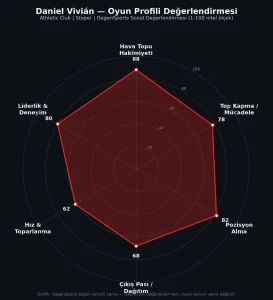
Jesus is not a classic “fox in the box” — he constantly shifts position, drags defenders wide, and links play through the half-spaces (the vertical corridors between the touchline and the centre of the pitch that creative players exploit to break defensive lines). His time under Guardiola’s false-nine system at City shaped him into a connector and reference point rather than a stationary target man.
Off the ball, his defining trait is pressing intensity: he ranks in the top 1st percentile among European forwards for tackles won in the final third (0.6 per 90), underlining his role as a first line of defence in gegenpressing systems (the tactic of immediately swarming the ball after a turnover to win it back high up the pitch). He is also a competitive aerial presence (61st percentile).
His creative output is more modest — a 44th percentile ranking for chance creation suggests his primary value lies in generating his own shots and capitalising on second balls after a press, rather than delivering the final pass. How well he integrates into Barcelona’s positional play (a structural approach where players occupy pre-defined zones to maintain constant passing angles) remains one of the club’s open questions this season.
Strengths
- Pressing resistance and off-ball movement: Ranks among Europe’s elite centre-forwards for final-third ball recoveries (top 1st percentile).
- Positional versatility: Comfortable as a centre-forward, false nine, winger, or even attacking midfielder, easing adaptation to different tactical systems.
- Big-match and tournament experience: Two World Cups (2018, 2022), a 2019 Copa América title, 2016 Olympic gold, and spells at four clubs (Palmeiras, City, Arsenal, Barcelona) under high-pressure conditions.
- Combination play and technical quality: Sharp one-twos, close control and game intelligence — Guardiola once called him the best striker/defender he has managed.
- Consistent scoring history: A steady goal ratio across his career (21 at Palmeiras, 58 at City, 32 at Arsenal in all competitions).
Weaknesses
- Injury history and physical fragility: A broken metatarsal (2017), an MCL knee injury (2017), a 2022 World Cup knee problem, and a serious ACL tear in January 2025 raise durability concerns for a 29-year-old.
- Limited game time and squad competition: Just 34 minutes across his first four Barcelona appearances suggests he isn’t currently viewed as a first-choice forward.
- Average creative output: A 44th percentile chance-creation ranking shows he isn’t a true playmaking No. 10.
- Age and post-peak risk: At 29 and coming back from ACL surgery, whether his explosiveness and top-speed sprints return to pre-injury levels remains to be seen.
GegenSports Rating: 78/100
Jesus’s overall profile deserves credit for experience, versatility and pressing output, but the injury history, current limited minutes, and being in the back half of his career keep the score below 80. This is GegenSports’ own original rating methodology and should not be confused with FIFA/FM-style ratings.
Similar Players
- Roberto Firmino (Liverpool/Al-Ahli, stylistic comparison): Shares the “false nine” profile built on pressing and link-up play rather than pure box presence.
- Alexander Isak (pre-Newcastle Real Sociedad reference): Similar movement intelligence and flexible positioning, though Isak is younger and sharper in front of goal.
- Kai Havertz (Arsenal, versatile forward): A comparable profile from the same club/league background, able to flex between striker and midfield roles with strong pressing contribution.
Fit for Turkish Süper Lig
Gabriel Jesus is currently an active Barcelona player on a new three-year deal, so a short-to-medium term Süper Lig move is not realistic. As a purely profile-based exercise, though: his pressing intensity would suit large-scale Süper Lig clubs that run high-tempo systems and need to compress opposing defences early, particularly in European competition. Later in his career (around 32-33), a move to a Süper Lig club from one of Europe’s top five leagues isn’t out of the question — but this remains entirely speculative.
Barcelona’s Tactical Fit for Jesus
Hansi Flick’s Barcelona is built around a high defensive line and an early press, which in theory makes Jesus’s final-third recovery numbers valuable. However, the attack is largely structured around Lamine Yamal and Raphinha cutting inside from the flanks, with Pedri and Fermín López supplying line-breaking passes from midfield — a setup that calls for a forward who can constantly rotate with the wingers and drop to involve a third man, rather than a fixed No. 9. Jesus’s City-era flexibility should suit this in theory, but his light early-season minutes suggest Flick hasn’t yet fully integrated him into that role. Expect his share of minutes to rise as fixture congestion (Champions League and La Liga overlapping) increases the need for rotation.
Suitable Turkish Clubs (Profile-Based, Speculative)
- Galatasaray: Okan Buruk’s preference for high-tempo forwards who stretch play wide, plus European pressing needs, fits well.
- Fenerbahçe: A club with European ambitions that could value an experienced, versatile centre-forward.
- Beşiktaş: Could benefit from the experience and leadership he’d bring to the attacking line.
This assessment is based purely on tactical/profile fit and does not imply any concrete talks or offers with any club.
Ideal Teammates
Jesus’s output is maximised alongside a creative No. 10 who can find him with line-breaking passes (a Pedri or Fermín López type) and fast wide players who can create 1v1s in wide areas (Raphinha or Lamine Yamal profiles). A high defensive-line No. 6 who can push up quickly after a Jesus press also amplifies his off-ball value.
Adaptation Score: 7/10
Jesus has successfully adapted across three countries (Brazil, England, Spain) and three distinct tactical philosophies (Guardiola’s positional play, Arteta’s structured press, now Barcelona’s possession game). Language and cultural adaptation risk is low given the Portuguese-Spanish overlap, but physical readjustment post-ACL and competing for a starting spot at a new club pull the score below 8.
Cost & Value-for-Money Scenarios
The reported fee Barcelona paid (€10-15M with add-ons, depending on the source) represents low-risk business by modern forward-market standards. If Jesus contributes effectively in 15-20 rotation appearances, the fee represents strong value. But if injuries recur or he remains stuck on the bench, the sporting return could be limited despite the modest outlay. In a hypothetical Süper Lig context, he’d fit as a late-career “experience signing” for a mid-to-upper budget club — though this scenario has no basis in any actual offer at present.
Development Potential
For a 29-year-old, “development” should be measured tactically and experientially rather than physically. Jesus’s potential over the next 2-3 years hinges on how well he integrates into Barcelona’s positional play and how much of his pre-injury explosiveness he recovers. Off-field contributions — mentoring younger attackers, dressing-room leadership — are likely to grow.
Injury History & Durability
Jesus’s medical record shows a recurring pattern of lower-body issues: a broken metatarsal (2017), an MCL knee injury the same year, a knee problem during the 2022 World Cup group stage, and most seriously, a torn ACL suffered against Manchester United in January 2025 that ended his 2024-25 season. He returned to action in December 2025 and has since been on a gradual workload-management plan — Barcelona’s cautious use of his minutes likely reflects this approach.
Foreign Player Status & UK Work Permit Analysis
Gabriel Jesus holds Brazilian citizenship and, based on publicly available information, no EU passport; he therefore counts against La Liga’s non-EU quota in Spain. In a hypothetical return to England, he would be assessed under the post-Brexit Governing Body Endorsement (GBE) points system. Having already played six seasons in England (Manchester City and Arsenal) with extensive top-flight and international experience, he would likely score highly enough for automatic clearance — though this is a general assessment, not formal legal advice, and would need confirmation under current UK immigration rules at the time of any application.
Suitable Leagues
- La Liga (current league): Still the best fit given his positional style and Barcelona’s possession football.
- Premier League: A league he already spent six seasons adapting to physically and tactically.
- Serie A: A tactically disciplined league that tends to value experienced forwards.
- Brazilian Série A: A plausible “homecoming” scenario in the closing stage of his career.
- Saudi Pro League: A financially attractive, speculative late-career option.
Sporting Director Summary
Gabriel Jesus is a low-risk addition who brings versatility, pressing quality and big-match experience to a squad. The main risk factors are his injury history and his currently limited minutes; for a sporting director, this is a “no guaranteed starter, but a rotation option who can make a difference” type of signing — best planned as a 2-3 season medium-term contribution rather than a long-term project. Three practical due-diligence points for any club evaluating a similar move: (1) independent medical confirmation of knee health, (2) performance-based bonus clauses to share risk, (3) a clearly communicated rotation plan from day one to avoid motivational issues.
Frequently Asked Questions
1. Who is Gabriel Jesus?
A Brazilian forward born in São Paulo in 1997, who came through the Palmeiras academy before playing for Manchester City and Arsenal, and joined Barcelona in September 2026.
2. What position does Gabriel Jesus play?
Centre-forward, false nine, or winger — a versatile attacking player.
3. How much did Barcelona pay for him?
Reports suggest a fee in the €10-15M range including add-ons, with figures varying by source.
4. When does his contract expire?
Reports indicate a three-year deal, with some sources citing an expiry of June 2029.
5. Has Gabriel Jesus had a serious injury?
Yes — he suffered a torn ACL in January 2025 and returned to action in December 2025.
6. How many caps does he have for Brazil?
64 caps and 19 goals for the Brazil senior national team as of November 2023.
7. What are his main strengths?
Pressing intensity, positional versatility, big-match experience, and technical combination play.
8. What are his main weaknesses?
A recurring injury history, modest creative output, and currently limited playing time.
9. Would he fit the Turkish Süper Lig?
His pressing profile would theoretically suit high-tempo Süper Lig sides, but as an active Barcelona player, a move isn’t realistic in the short term.
10. Why did he leave Arsenal?
Barcelona needed to fill the attacking void left by Lewandowski and Ferran Torres, and a low-cost deal was agreed on deadline day.
11. What is his market value?
Around €15-16M according to FotMob.
12. Is he a starter at Barcelona?
Not yet — he has been used sparingly (34 minutes across four appearances) at the start of the season.
Related GegenSports Content
- Julián Álvarez Scout Report — Atlético Madrid
- Dávid Hancko Scout Report — Atlético Madrid
- Morten Hjulmand Scout Report — Atlético Madrid
- What is PPDA? Measuring Pressing Intensity
- What is xG (Expected Goals)?
Sources
- Wikipedia — Gabriel Jesus
- FotMob — Gabriel Jesus player profile and statistics
- 101greatgoals.com — Gabriel Jesus tactical analysis
- Al Jazeera, ESPN, Sky Sports — Barcelona transfer coverage (September 2026)
- Wikimedia Commons — image sources (CC BY-SA / CC BY licensed)